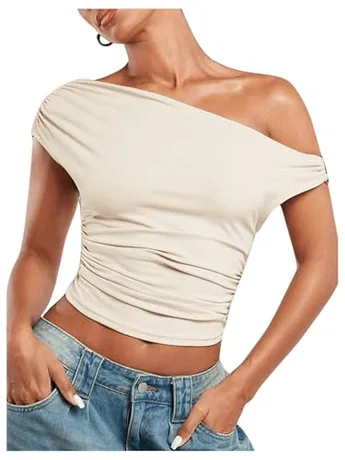
Crop Top
Sleeveless Ruched Crop Top, Apricot (3X-Large)
3X-Large · short sleeve
$4.99
Six fabric families do almost all the work in a wardrobe this size. Knowing which is which turns a label into a prediction.

Fabric is the one thing on a product page that predicts how a garment will behave, and it is the line most people skip. Two tops with the same photograph and the same price can be completely different objects, and the difference is printed on both of them.
This piece covers what the words mean, which fabric wins at what, and one safety rule that already applies to everything you have ever bought.
We make clothes from most of these, so read it knowing where we stand. The comparison table names the places our own fabrics lose.
Fibre names are not marketing. The rules under the Textile Fiber Products Identification Act set out which fibres must be named and how.
the respective generic names of all fibers present in the amount of 5 per centum or more of the total fiber weight of the textile fiber product shall be used when naming fibers in the required information
Five percent is the threshold that matters most in practice. It is why a label can read 95% polyester and 5% elastane, and why a trace of something exotic can be present without appearing at all.
Fibre content tells you the material. Construction tells you how it behaves. These six cover most of what a wardrobe at this price is made of.
| Ribbed knit | Jersey | Satin woven | Mesh | Denim | Sequin | |
|---|---|---|---|---|---|---|
| Stretch | High | Medium | None | High | Low unless blended | Low |
| Breathes | Well | Best | Poorly | Very well | Well | Poorly |
| Creases | Barely | A little | Badly | No | No | No |
| See-through in daylight | Rarely | Pale colours can | No | Yes, by design | No | Depends on backing |
| Snags | Rarely | Rarely | On jewellery | Easily | No | Constantly |
| Machine wash | Cold gentle | Cold normal | Cold, mesh bag | Cold, mesh bag | Cold, inside out | Hand wash |
Two rows there are a straight loss for the fabrics we use most. Satin creases if you sit in it, and sequins shed. Neither is a defect and both are permanent features of the material.
Opacity is a function of three things: fibre, yarn weight and knit density. A white ribbed top in a heavy yarn is opaque. The same rib in a fine yarn is not, and both photograph identically under studio light.
Three checks work from a product page. Look for a stated fabric weight in grams per square metre, where anything over 180 is usually safe. Look at the photograph for a raised arm, because backlight through a sleeve gives it away. And treat white, pale grey and nude as the risk colours, since black in the same yarn is almost always opaque.
Clothing sold in the United States has to meet a flammability standard, and almost nobody who buys clothes knows it exists. The Consumer Product Safety Commission states its scope plainly.
The Standard for the Flammability of Clothing Textiles, codified at 16 C.F.R. part 1610, provides methods of testing the flammability of clothing and textiles intended to be used for clothing.
The standard itself sorts fabrics into classes, and the class that is allowed in clothing is defined in one sentence.
Class 1 textiles exhibit normal flammability and are acceptable for use in clothing.
Two honest points follow. Meeting the standard is not the same as being flame resistant: it means the fabric burns at a normal rate rather than flashing. And it applies to the fabric, not to the brand, so it is not something anybody gets to advertise as an achievement.
We mention it because the absence of the claim is the interesting part. If a clothing brand tells you its fabric passes a flammability standard, it is telling you something that is true of nearly every garment on sale.
Clothes at this price almost never fail at the seam. They fail at the surface, and there are exactly two mechanisms.
Short fibres work loose, tangle and ball up where fabric rubs fabric: under the arms, at the inner thigh, across a seatbelt line. Acrylic and cotton blends do it most, polyester and nylon least, because their fibres are long and smooth.
It is not a defect and it is not preventable. It is manageable. Wash inside out on a cold gentle cycle, dry flat, and run a fabric shaver over the piece twice a season. A shaver costs less than one top and saves several.
A single loop gets pulled out of the weave by a ring, a bag strap or a dishwasher rack. Mesh and fine knits snag easily, denim and jersey almost never do.
Never cut a snag. Push the loop through to the inside with a blunt needle, and the piece looks untouched. Cutting it turns one loop into a hole within three washes.
Four tests take under a minute in a shop and translate to memory when you buy online.
None of these needs expertise. They need thirty seconds and knowing that the answers are worth having.
Cotton jersey and mesh, in that order. Both move air. Polyester in a heavy weight is the worst thing you can wear in humidity, and satin is close behind.
Anything with four to six percent elastane, because sitting is what makes rigid fabric uncomfortable by three in the afternoon. Ribbed knit is the safest bet in this range.
Satin and sequin, and accept the trade. Satin creases where you fold and sequins catch on everything. Both look better under low light than any knit ever will.
Polyester and nylon. They dry overnight in a hotel bathroom, and creases fall out of a hanging garment in the steam of a shower. Cotton does neither.
Fabric maps onto department more neatly than most people expect, and knowing the map saves scrolling.
If you know which fabric you want, start from the department rather than the search box. The filters there run on silhouette, and silhouette and fabric travel together more often than not.
Satin is a weave, not a fibre. Almost all satin at this price is woven from polyester. That explains both the price and the fact that it does not breathe. Silk satin exists and is a different object at a different price. Neither one forgives a crease.
Every sequin garment loses some. They are stitched or glued to a backing, and movement works them loose. Store them flat rather than hanging, and never put one in a machine. A sequin dress is bought for a night, not for a decade, and pricing it that way is the honest read.
Viscose has the best hand of anything in this price bracket. It also weakens when wet. That is where the hand wash label comes from, and why the ones that go through a machine come out a size smaller and slightly limp. It is a fabric that rewards care and punishes speed.
Sorting by colour is a habit from an era when dyes ran. Modern dyes mostly do not, and sorting by fabric saves far more clothes than sorting by shade.
| Fabric | Wash | Dry | The mistake |
|---|---|---|---|
| Cotton | Cold, normal | Line or low | Hot wash, then it shrinks |
| Polyester | Cold, normal | Low or line | High heat, which sets creases permanently |
| Viscose | Hand or cold gentle | Flat | Wringing it while wet |
| Elastane blends | Cold, gentle | Never tumble | Heat, which kills the stretch for good |
| Mesh and lace | Cold, mesh bag | Flat | Washing it loose with a zip |
| Sequin and satin | Hand, cold | Flat, away from sun | Any machine at all |
One line covers most of it. Heat is what destroys clothes at this price, not water and not detergent. A cold wash and an airing rack will keep a wardrobe going years past what a dryer allows.
Sizing follows the same rule, and the piece on what a size chart can and cannot tell you ends on the same advice from the other direction.
At the bottom of this range a piece is one fabric, simple seams and no lining. It will do a season of hard wear and it is honest about it. Further up there is lining, a heavier fabric and finished seams you can feel from the inside.
The thing that does not change with price is fibre behaviour. Expensive viscose still loses strength when wet. Expensive sequins still shed. Anybody telling you otherwise is selling the price, not the cloth.
Where this came from
Office of the Federal Register
16 CFR Part 303, Rules under the Textile Fiber Products Identification Act
Office of the Federal Register
16 CFR Part 1610, Standard for the Flammability of Clothing Textiles
U.S. Consumer Product Safety Commission
Flammable Fabrics Act: business guidance
Every source above was opened and read on the date shown. Where a page says something we cannot verify ourselves, we quote it and name it rather than restating it as our own.
Shop what this piece is about
3X-Large · short sleeve
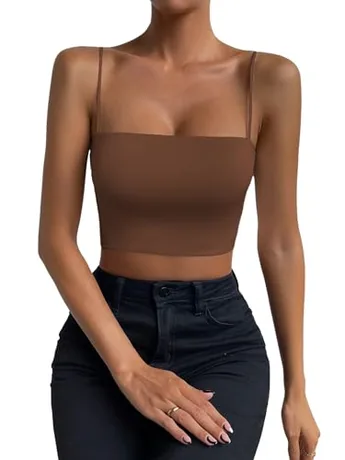
Large · sleeveless
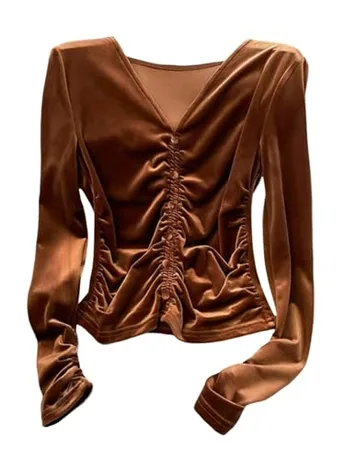
Medium · long sleeve
XX-Large · short sleeve
Keep reading

Why the same size fits twice and fails once, how to measure yourself in four minutes, and the one line on a label that decides everything.
1,623 words
Cost per wear, the four-outfit test, what a big range is good at and what it is bad at, and the two labels worth reading before anything else.
1,712 words