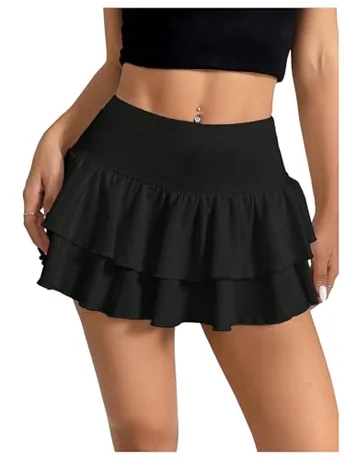
Skirt
Mini Ruffle Skirt, Black
Small Petite · ruffle
$7.99+1
A size label is a guess written by somebody who has never met you. Here is how to turn it into a decision you can trust.

There is no legal definition of a size 8. There is no standard body it refers to, no authority that checks it, and no obligation on anybody to make one brand's 8 match another's. Every chart you have ever read was somebody's decision.
That sounds like a reason to give up. It is not. Once you know what a chart is actually made of, four measurements and one line on the label get you to the right size more often than trying things on in a badly lit changing room.
We sell a lot of clothes online, so this matters to us in a self-interested way: a return costs everybody time. What follows is what we would tell a friend.
Take these once, write them on your phone, and never take them again until your body changes. Four minutes, one soft tape, no mirror needed.
Two optional extras earn their keep. Inseam, from crotch to ankle bone, settles trousers. Shoulder to hem on a top you already love settles length, which is the thing photographs lie about most.
Two pieces with identical measurements fit completely differently if one stretches and one does not. This is the single biggest cause of an ordered size being wrong, and it is solvable by reading one line.
Fibre content has to be published, and there is a federal rule about how. The Textile Fiber Products Identification Act rules are specific about which fibres get named.
the respective generic names of all fibers present in the amount of 5 per centum or more of the total fiber weight of the textile fiber product shall be used when naming fibers in the required information
In practice that means a label reading 95% polyester, 5% elastane tells you the piece stretches and will pull back. A label reading 100% cotton or 100% polyester with no elastane tells you it will not. Five percent elastane is roughly the line between a garment that gives and one that does not, and the piece on what each fabric really does goes further into why.
The cheapest way to make a size range is to draw one pattern and multiply it. It works up to a point and then it does not: a body two sizes larger is not the same shape scaled up, it is a different shape. Sleeves get tight before the waist does, and armholes get shallow.
The tell is a chart where every measurement increases by exactly the same amount at every step. Real grading changes step size as it goes. Plus pieces in our range are cut from their own patterns rather than scaled, which is worth exactly as much as it sounds and no more.
A set is sold as one size, and your top half and bottom half do not have to agree. There is no clever answer here: order to whichever half is larger and accept that the other half will be roomy, or buy the two pieces separately from tops and bottoms instead of from sets and outfits.
Sizes have grown over the decades while the numbers stayed the same. That is why a vintage 12 fits like a modern 8 and why the number on a label tells you almost nothing across brands. Measurements travel. Numbers do not.
| Department | Pieces | Pieces with a published size | Plus pieces |
|---|---|---|---|
| Dresses | 484 | 100% | 101 |
| Tops | 508 | 100% | 117 |
| Bottoms | 730 | 100% | 96 |
| Sets & Outfits | 216 | 100% | 14 |
| Bodysuits & Jumpsuits | 333 | 100% | 49 |
| Swim & Beach | 216 | 100% | 17 |
| Sleep & Basics | 190 | 100% | 29 |
| Outerwear | 160 | 100% | 23 |
| Men's | 250 | 100% | 3 |
| Girls & Boys | 207 | 100% | 0 |
Two things in that table are worth reading slowly. The middle column is the honest one: where a maker does not publish a measurement, we print nothing rather than a guess. And the plus column is not a marketing number, it is a count of pieces cut on plus patterns.
That covers nearly everything. The exception is outerwear, where the question is not your body but what goes under it: a blazer over a hoodie needs a size more than a blazer over a cami.
Three measurements decide more outfits than the four on any chart, and almost nobody publishes them.
Arm circumference decides whether a fitted long sleeve is comfortable or a tourniquet. Rise, the distance from crotch seam to waistband, decides whether low-rise jeans sit where you expect or three inches lower. Strap drop on a cami decides whether the neckline lands where the photograph promised.
Where a maker publishes any of the three, we put it on the card. Where nobody publishes it, the honest move is to measure a garment you own and compare, which takes a minute and beats every guess.
The other line worth reading before you order is the care instruction, because it tells you whether the piece will still be your size after a wash. Care information is regulated, and the rule is strict about whoever prints a care claim having a basis for it.
To fail to possess, prior to sale, a reasonable basis for all regular care information disclosed to the purchaser.
A piece that says cold wash only is telling you it will shrink in warm water. A piece that says do not tumble dry is telling you the dryer will take it down a size. Those are not suggestions, they are the manufacturer stating the limits of their own product.
Every product photograph is a fitting on somebody else. Three things get hidden in the process, and all three are checkable before you order.
A cropped top on a tall model sits at the waist. The same piece on somebody eight inches shorter sits at the ribs. Length from shoulder to hem, measured on a garment you own, settles this in ten seconds and no photograph ever will.
Studio shots are often pinned at the back to make a piece hang cleanly. It is normal and it is not dishonest, but it means the drape you are looking at is a size smaller than the one on the label. Photographs that show the back of a garment are the ones to trust on fit.
Weight decides whether a piece skims or clings, and a picture flattens it entirely. A rule that works: if you can see the model through a raised arm, the fabric is light. If the hem holds a shape when she moves, it is not.
Ordering two sizes is not cheating. It is what fitting rooms used to be for, and with a range this size it is often the fastest way to learn how a department runs on your body.
Do it once per department rather than once per piece. Tops, bottoms and dresses each grade differently, so one calibration order in each teaches you more than five scattered ones.
Keep everything with tags on until you have tried it with the shoes and the layer you would actually wear. A skirt that seems too short over bare legs reads completely differently over tights, and half of what goes back would not have to.
Payment, delivery and returns happen at checkout with our retail partner rather than with us, so their window is the one that counts. It is worth checking before you order two sizes, not after.
First, keep a garment you already love and measure it flat. Chest across, length from shoulder, waist across. Those three numbers compared against a chart beat any amount of squinting at a photograph.
Second, when a piece works, write down which size in which department. Fit is consistent within a brand far more than it is across brands, and after three orders you stop guessing entirely.
The size ladder on our home page exists for the same reason. It lets you see every silhouette we make in one table, so you can find the shape first and worry about the number second.
Where this came from
Office of the Federal Register
16 CFR Part 303, Rules under the Textile Fiber Products Identification Act
Office of the Federal Register
16 CFR Part 423, Care Labeling of Textile Wearing Apparel
Every source above was opened and read on the date shown. Where a page says something we cannot verify ourselves, we quote it and name it rather than restating it as our own.
Shop what this piece is about
Small Petite · ruffle
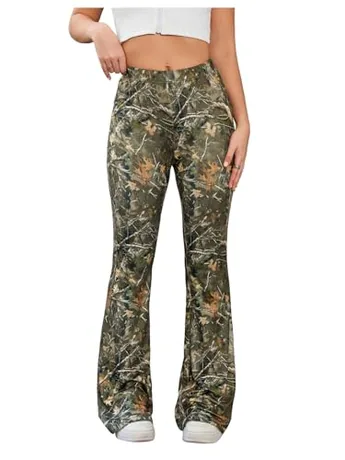
X-Small
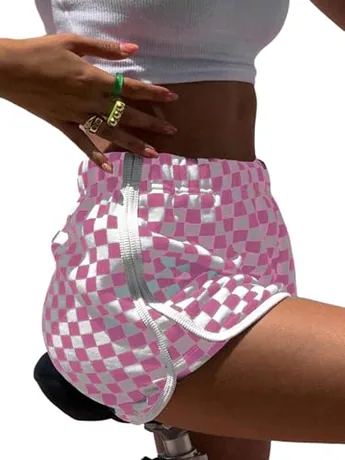
X-Small · plaid
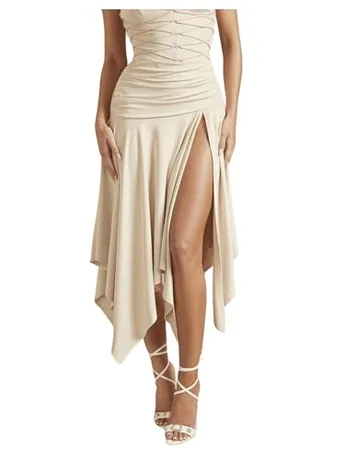
Small · ruched
Keep reading

What polyester, viscose and elastane are by legal definition, which fabrics go see-through, and the safety standard every garment sold here already meets.
1,700 words
Cost per wear, the four-outfit test, what a big range is good at and what it is bad at, and the two labels worth reading before anything else.
1,712 words